Introduction
Ultrasonography (USG) for thyroid nodules is a safe and painless test. It helps doctors see the thyroid gland and any lumps, called nodules, inside it. Because USG uses sound waves, it does not use radiation. Many people have thyroid nodules, and most are harmless. However, doctors use USG to check if a nodule needs more tests or treatment. In this blog, you will learn what thyroid nodules are, how USG works, and what to expect during the test.
What Are Thyroid Nodules?
Thyroid nodules are small lumps that form in the thyroid gland. This gland sits at the front of your neck. Most nodules are not cancer. In fact, many people do not even know they have them. However, some nodules can cause problems, such as:
Sometimes, thyroid nodules make too much hormone. This can cause symptoms like weight loss, sweating, or a fast heartbeat. Because of this, doctors often check nodules with tests like USG.
What Is Ultrasonography (USG)?
Ultrasonography, also called ultrasound, is a test that uses sound waves to make pictures of the inside of the body. For thyroid nodules, USG helps doctors see the size, shape, and features of each nodule. Unlike X-rays, USG does not use radiation. Therefore, it is safe for most people, including children and pregnant women.
Why Is USG Used for Thyroid Nodules?
Doctors use USG for thyroid nodules for several reasons. First, it helps find nodules that cannot be felt by hand. Next, it shows if a nodule is solid or filled with fluid. Also, USG can help doctors decide if a nodule looks suspicious and needs a biopsy. In addition, USG guides the needle during a fine-needle aspiration (FNA) biopsy. Because of these reasons, USG is the main test for checking thyroid nodules.
How Is the USG Procedure Performed?
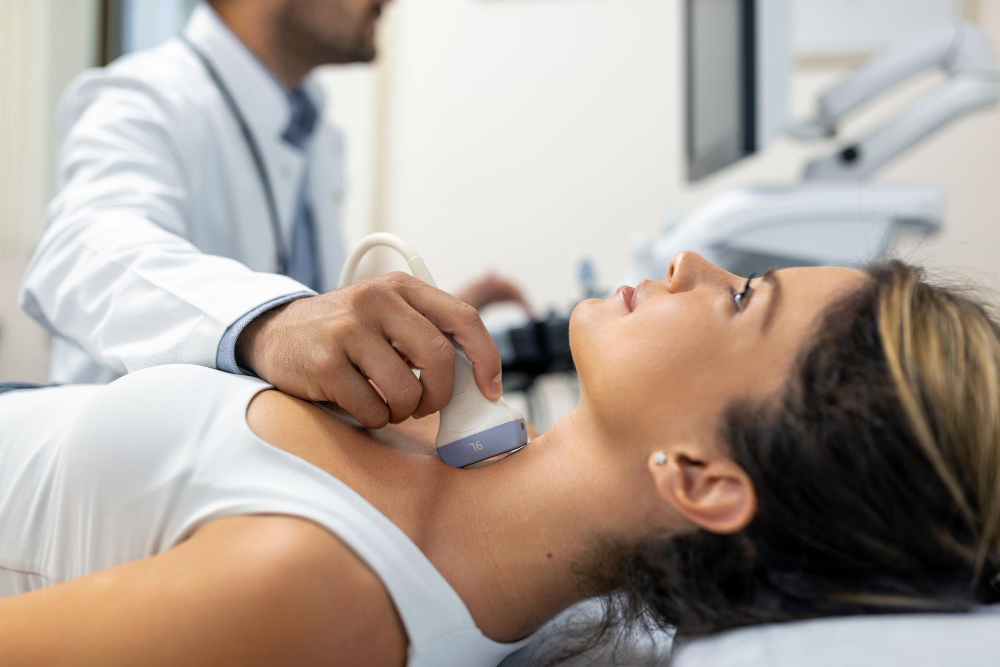
The USG test is simple and quick. Here is what usually happens:
Because the test is painless, you do not need any special preparation. You can eat and drink as usual before the test.
What to Expect During and After the Test
During the USG, you may feel a little pressure from the transducer, but it should not hurt. The gel may feel cool on your skin. After the test, the gel is wiped off, and you can return to your normal activities right away. There are no side effects or recovery time needed. Your doctor will review the images and explain the results to you.
Benefits and Limitations of USG for Thyroid Nodules
USG offers many benefits for checking thyroid nodules. For example:
However, USG also has some limitations. For instance, it cannot always tell if a nodule is cancer. Sometimes, a biopsy is still needed. Also, USG may not show very small nodules or those deep in the neck. Even so, it remains the best first test for thyroid nodules.
Frequently Asked Questions (FAQs)
Conclusion
Ultrasonography (USG) for thyroid nodules is a safe and helpful test. It gives doctors important information about your thyroid. If you have questions or concerns about thyroid nodules, consult your healthcare provider for advice tailored to your needs.