
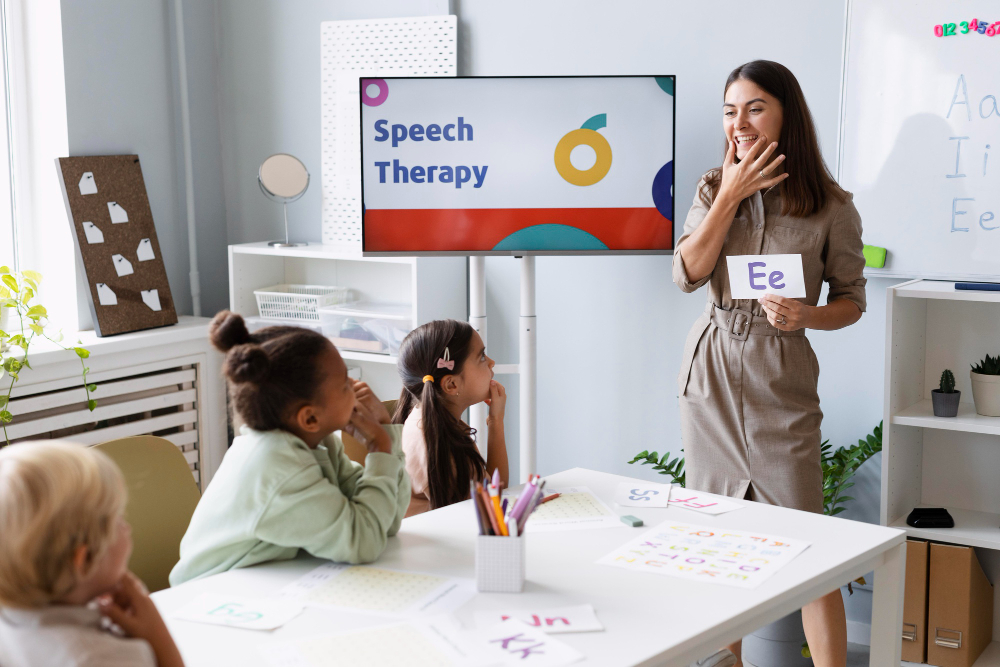
Introduction to Speech Therapy
Speech therapy helps people improve their speech, language, and communication skills. Many children and adults benefit from speech therapy. In fact, speech therapy can help with speaking, understanding, reading, and even swallowing. If you or your child struggles with these skills, speech therapy may be helpful. Early support often leads to better results.
What Is Speech Therapy?
Speech therapy is a treatment that helps people with speech and language problems. A trained professional, called a speech-language pathologist (SLP), leads these sessions. They use special techniques to help people speak more clearly and understand language better. Sometimes, therapy also helps with swallowing or voice issues. According to the American Speech-Language-Hearing Association (ASHA), speech therapy can help people of all ages.
Common Speech and Language Disorders Treated
Speech therapy for children and adults can address many issues. For example, some common problems include:
Each person’s needs are different. Therefore, speech therapists create a plan just for you.
Signs and Symptoms That May Indicate a Need for Speech Therapy
Sometimes, it is hard to know when to seek help. However, certain signs may show a need for speech therapy. Watch for these symptoms:
If you notice these signs, it may be time to talk to a speech therapist.
How Speech Therapy Works: Assessment and Treatment Process
First, the speech therapist will assess your needs. They may ask questions, listen to your speech, and use simple tests. This helps them understand your strengths and challenges. Next, they create a treatment plan just for you. Sessions may include:
Over time, you may notice steady progress. Regular practice is important for success.
Benefits of Speech Therapy
Speech therapy offers many benefits. For instance, it can help you:
Moreover, speech therapy can boost self-esteem and help you connect with others. According to the CDC, early intervention often leads to better outcomes.
Tips for Supporting Speech Development at Home
Families play a big role in speech development. Here are some helpful tips:
With regular practice, children often make steady progress. However, every child learns at their own pace.
When to Seek Professional Help
Sometimes, extra support is needed. If your child is not meeting speech milestones, or if you notice ongoing problems, it is wise to seek help. For example, if your child is not using words by age two, or if speech is hard to understand, consult a speech therapist. Adults who notice sudden changes in speech or swallowing should also seek help right away. Early action can make a big difference.
Prevention and Early Intervention
Early intervention is key to success. The sooner you start, the better the results. Regular checkups and open communication with your doctor can help catch problems early. In addition, following tips at home can support healthy speech development. Prevention is always better than waiting for problems to grow.
Conclusion
Speech therapy can change lives. It helps people speak, understand, and connect with others. If you or your loved one needs support, consult a certified speech therapist for personalized guidance.